
The inviter's side, where it actually lives
Most editorial notes on the Player11 refer code mechanic stop at the invitee's wallet. The invitee pastes the code, completes KYC, locks the first paid contest, and the credit lands on the invitee's side. The inviter's side is treated as a mirror image that behaves identically. The mirror is misleading. The inviter's wallet carries a list, not a balance, and the list reads per-friend rather than as a single running pool.
The screen reads as a list, not a balance
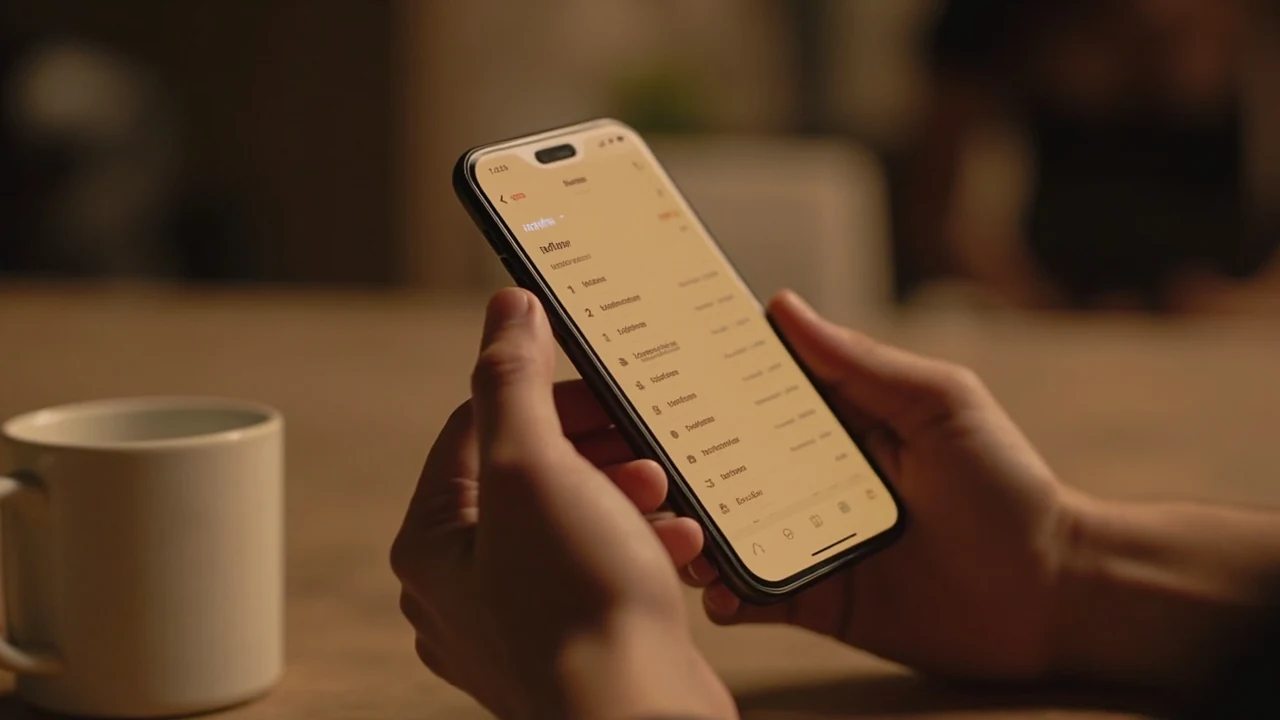
Open the Player11 app, tap Profile, tap Refer & Earn. The screen renders one row per qualifying invitee. Each row carries a short alphanumeric string for the invitee's handle, the credit amount the invitee earned, the date the credit landed, and the remaining usage window. The total at the top of the screen is a sum of the rows below it, not a balance the inviter can spend at once. A reader who sees three rows of equal credit amounts and a total that equals three times that amount is looking at three independent credits, each tied to its own invitee.
The list behaviour is the design choice the screens understate. A reader who treats the total as a balance will misread the screen on three points. The total cannot be debited against a single contest entry, because the contest-entry screen debits a single credit at lock-in and leaves the others untouched. The total does not expire together, because each row carries its own usage window. The total does not move to the winnings ledger, because the invite credit stays in the entry-fee ledger while winnings earned from contests paid for with the credit flow into a separate withdrawable balance.
The four-row mental model for one invite
Each row in the list carries four readable values. Row one is the invitee handle, which the operator renders as a short string rather than the invitee's full name for privacy. Row two is the credit amount, which the operator publishes per season and which the reader can confirm on the Refer & Earn screen on the day the credit lands. Row three is the landing date, which is the day the invitee's qualifying chain closed, not the day the invitee signed up. Row four is the remaining usage window, which counts down from the landing date and resets only when the operator publishes a new season's terms.
A careful reader checks all four rows before assuming a credit is in good standing. A row with a near-empty usage window is the same as a row with no credit at all, because the contest-entry screen will refuse to debit the credit past the window. A row with a contested landing date is the same as a row with a pending credit, because the cross-account check at payout can still cancel the credit. The screen shows the values; the interpretation is the reader's job.
How the inviter's credits stack across multiple friends
A reader who invites four friends and watches each qualifying chain close will see the Refer & Earn screen grow from one row to four rows over the course of the season. The total at the top grows by the per-friend credit amount each time a new row lands. The list view sorts by landing date, so the oldest credit sits at the top and the newest sits at the bottom. The order is the order the inviter's contest-entry screen will debit the credits against, because the operator's lock-in rule consumes the credit with the shortest remaining window first.
The stacking behaviour is conservative on purpose. Each credit is bound to its invitee, so the operator can write off a single row if the invitee's account is later closed, contested, or reversed. A reader who treats the list as a single pool cannot write off a single row, and a write-off would create a phantom balance that the inviter cannot actually spend. The list design also lets the inviter read each credit's age at a glance, which matters because the usage window measures from the landing date, not from the invite date.
The practical implication is that the inviter's contest-entry screen debits one credit per entry. A reader who locks a single paid contest with the inviter's wallet will see exactly one row move from available to consumed, and the other rows will sit untouched. The next contest entry consumes the next row in the list, not a slice of the total. A reader who plans to lock several contests in a row should plan the order against the list rather than against the total.
The usage window resets per cycle, not per friend
Each row carries a usage window that counts down from the row's landing date. The window is the same window the operator publishes for the season, which the operator can tighten or lengthen between seasons. A reader who invites a friend in week one and another friend in week twelve will hold two rows whose windows close on different dates, measured from their own landing dates. The windows do not align because the rows do not pool.
The per-cycle reset is the part of the mechanic most inviter-side notes skip. A new season does not refresh an old row. A new invite does not refresh an older row's window. The only way to refresh a row's window is for the operator to publish a new season's terms that explicitly extend the window for outstanding credits, and the operator does that rarely. A reader who treats the rows as a single balance with one shared window will read the screen the wrong way and will plan contest entries against a clock that does not exist.
The practical signal to watch is the row's remaining usage window. A row with under seven days left is the next row the lock-in rule will debit against. A row with over thirty days left can wait for a more favourable contest. The order the screen sorts the list is the order the lock-in rule consumes the list. The inviter who plans entries against the list rather than against the total keeps the windows aligned with the actual contest calendar.
The withdrawal chain from invite credit to withdrawable cash
The invite credit is not a withdrawable balance. The credit applies to contest entry only, and the screens mark it as such. The withdrawal chain that turns an invite credit into cash the inviter can move runs through three separate stages, each governed by a different gate on the operator's ledger. A reader who conflates the stages will read the wallet screen the wrong way and will assume a credit the inviter cannot withdraw is the same as winnings the inviter can withdraw.
Stage one is the contest entry. The inviter debits one invite credit against a paid contest entry at lock-in. The credit moves from the available column on the Refer & Earn row to the consumed column, and the entry sits on the contest ledger as an entry paid for with the invite-credit source. The contest settles when the match ends and the points are finalised. Stage two is the winnings credit. If the contest pays out, the winnings land on the inviter's withdrawable balance, not on the invite-credit ledger. The winnings are independent of the invite credit and follow the normal withdrawal path. Stage three is the UPI or bank withdrawal. The inviter initiates the withdrawal through the Wallet screen, and the operator transfers the cash to the inviter's verified UPI handle or bank account after the standard processing window.
The three stages are sequential. The contest must settle before the winnings credit. The winnings credit must clear KYC before the withdrawal can be initiated. The withdrawal must clear the operator's payment processor before the cash lands on the inviter's bank statement. Each stage has its own clock, and the clocks do not move together. The invite-credit clock runs from the landing date; the contest-settlement clock runs from the match result; the KYC clock runs from the first withdrawal attempt; the UPI clock runs from the withdrawal request. A reader who plans a withdrawal against the invite-credit clock will miss the contest-settlement clock and the KYC clock and will sit on a phantom balance the operator cannot move.

What the operator publishes, what it withholds, and what to verify
The operator publishes the credit amount, the eligible contests list, and the usage window on the Refer & Earn screen inside the app. The operator publishes the withdrawal processing window on the Wallet screen. The operator does not publish the per-row sort order on a static page, the seasonal cap on the number of invitees, or the cross-account check at payout. The unpublished parts of the mechanic are the parts a careful reader verifies on the day of the next invite, because the operator can adjust them between seasons without notice.
The cap on the number of invitees is the unpublished part of the mechanic most readers hit by accident. A reader who sends the same code to twenty friends over a season will see twenty rows on the Refer & Earn screen if every chain closes, and the screen does not show a cap until the cap is reached. The cap is reached silently, the way a cross-account check is reached silently: the next invitee's chain closes, the qualifying conditions are green, and the matching credit on the inviter's side never lands. The reader has to write to customer care on the in-app support queue to confirm whether the cap or a different gate cancelled the credit.
The cross-account check is the other unpublished gate. The check runs at payout, after all three invitee-side gates are green, and it verifies that the inviter's wallet is active and in good standing. An inviter who closes the inviter's account, hits a payment reversal on a separate contest, or fails a verification check on the inviter's own wallet cancels the matching credit on the invitee's side as well. The check is silent, and the screen does not name it. The screen shows the row as pending; the reader has to write to customer care to learn that the cross-account check is the gate.
The seven-row decision table for an inviter
Seven decisions sit between an inviter sending the next code and the inviter's contest-entry screen debiting the resulting credit. The table is built from the Refer & Earn screen and the standard inviter-side verification pattern.
| Decision | Where to verify | What it costs if missed |
|---|---|---|
| Confirm the invitee's signup code was pasted into the refer field, not the bonus field | Invitee side, Refer & Earn screen | Inviter's row never appears on the list |
| Confirm the invitee is in an eligible state when the chain closes | Invitee side, Legal screen, state eligibility list | Inviter's row stays pending past the window |
| Confirm the invitee's first paid contest settles with cash, not bonus funding | Invitee side, contest entry screen, payment source | Inviter's row never advances to available |
| Confirm the inviter's wallet is active and in good standing at payout | Inviter side, Wallet screen, account status | Cross-account check cancels the row |
| Read the row's landing date and remaining usage window before planning entries | Inviter side, Refer & Earn row | Credit sits in available column past the window and forfeits |
| Lock contest entries in the order the list sorts, not against the total | Inviter side, contest entry screen, debit confirmation | Wrong row consumed first, older window forfeits |
| Track winnings earned from invite-funded entries separately from invite credits | Inviter side, Wallet screen, withdrawable balance | Inviter reads a phantom balance and plans a withdrawal against the wrong ledger |
The third column is the part of the table that is not on the screen. The screen names the decision; the screen names where to verify; the screen does not name the cost of missing it. The cost column is built from the operator's standard support-queue responses and the typical pattern of contested credits that arrive at customer care weeks after the relevant window closes.
The capacity cap and the seasonal pattern
The operator publishes a per-season cap on the number of invitees one inviter can refer in a single campaign. The cap is reached silently, the way a contested KYC document is reached silently: the next chain closes, the conditions are green, and the matching credit on the inviter's side does not appear on the Refer & Earn list. The inviter has to write to customer care to confirm whether the cap or a different gate cancelled the row. The cap is reset at the start of a new season, but the reset is not guaranteed and is not announced in advance.
The seasonal pattern is the part of the mechanic most useful for an inviter who plans a long-running invite campaign. The pattern has three phases. Phase one is the early-season ramp, when the cap is high and the operator is recruiting new invitees. Phase two is the mid-season steady state, when the cap tightens and the operator is rewarding active inviters rather than new invitees. Phase three is the late-season close, when the cap can shorten to one invitee per cycle and the operator is closing the books on the season's credits. The phases are not announced, but they are visible in the per-row landing dates on the Refer & Earn screen: a reader who lands four rows in week one and zero rows in week twelve is hitting a tightened cap, not a verification problem.
A practical signal to watch is the per-row landing cadence. An inviter who invites four friends in week one and sees four rows land within the same week is in the early-season ramp. An inviter who invites four friends across the season and sees only two rows land is in the mid-season or late-season cap. The cadence is the only signal the screen publishes; the cap itself is the part the operator withholds. A reader who plans against the cadence can read the cap without writing to customer care.
What a reader can do inside the app today
Five actions sit between an inviter deciding to send the next code and the next contest entry being debited against the resulting credit. The actions are the same five a careful reader runs on the inviter's own invitations, adapted for the inviter rather than the invitee.
Action one: open the Refer & Earn screen and read the row list. Confirm the rows that have already landed, the landing dates, the credit amounts, and the remaining usage windows. A reader who reads the list before sending the next code knows exactly what the next row will look like when it lands. Action two: confirm the inviter's own wallet is active and in good standing. A pending KYC re-check, an open payment reversal, or a dormant wallet cancels the cross-account check at payout. Action three: track the inviter's own paid contest activity. A reader who wants to consume the invite credits against paid contests should plan the contest entries in the order the list sorts, not in the order the matches fall on the calendar. Action four: separate the invite-credit ledger from the winnings ledger on the Wallet screen. The two ledgers do not pool; the invite credits apply to entry, the winnings apply to withdrawal. Action five: confirm the UPI handle or bank account on the Wallet screen is verified before locking a paid contest whose winnings the inviter intends to withdraw. An unverified withdrawal handle stops the cash at stage three of the chain.
The five actions are conservative on purpose. Each one mirrors a gate the operator runs after the next row lands. A reader who runs all five before sending the next code will land the credit inside the published window, debit the credit against a paid contest that settles with cash winnings, and route the winnings through the verified withdrawal handle inside the standard processing window.
Evidence behind the read
The read above is built from three observation surfaces. The first is the in-app Refer & Earn screen, which shows the per-invitee row list with the landing dates, credit amounts, and remaining usage windows. The second is the Wallet screen, which separates the invite-credit ledger from the winnings ledger and from the deposit ledger. The third is the customer-care support queue, which returns the named reason for a row that fails to land or fails to debit, and is the surface that surfaces the unpublished parts of the mechanic (the cap, the cross-account check, the contested KYC document).
The cadence signal in section eight is the observed pattern on a working referral campaign across a season, not a guarantee. The operator can adjust the cadence, the per-season cap, or the eligible contests list between seasons without notice. A reader who treats the cadence as a fixed contract is reading a static page; a reader who checks the per-row landing dates on the Refer & Earn screen on the day of the next invite is reading the source. The two are not the same.
What remains uncertain is the cap on the number of invitees per campaign. The operator does not publish the cap on a static page; the operator publishes it silently when the cap is reached, and the only surface that returns the cap is the customer-care support queue. A reader who plans a long-running invite campaign should write to customer care once at the start of the season to confirm the current cap, and then plan the campaign against the cap rather than against an assumed unlimited number of invites.
What the inviter side looks like in the next season
The inviter-side mechanic is the part of the refer code program most likely to evolve between seasons. The operator has been adjusting the credit amount, the eligible contests list, the usage window, and the per-season cap for the past three cycles. A reader who plans to invite a long list of friends through the next season should treat the per-season terms as a per-season contract and re-check the Refer & Earn screen at the start of each season.
A practical signal to watch is the per-row landing date cadence. A tighter cadence means the operator is rewarding rapid-fire invites and treating the invite credit as a transactional incentive. A looser cadence means the operator is treating the invite credit as a recurring balance and rewarding longer-running campaigns. The signal matters for the decision in section seven: an inviter who wants to invite a long list of friends should send the codes early in the season when the cap is highest, and should plan contest entries against the per-row sort order rather than against the total at the top of the screen.
The next verified check is the Refer & Earn screen on the day of the next invite. An inviter who opens the screen before sending the next code will see exactly which rows have already landed, which rows are still pending, and which rows are about to forfeit past their usage windows. The mechanic is the same; the operator's tuning is the variable. The refer code page covers the standard mechanic from the invitee's side; the companion pages cover the cap, the withdrawal chain, and the seasonal pattern from the inviter's side. The three together give a careful reader the full picture across both sides of the program.